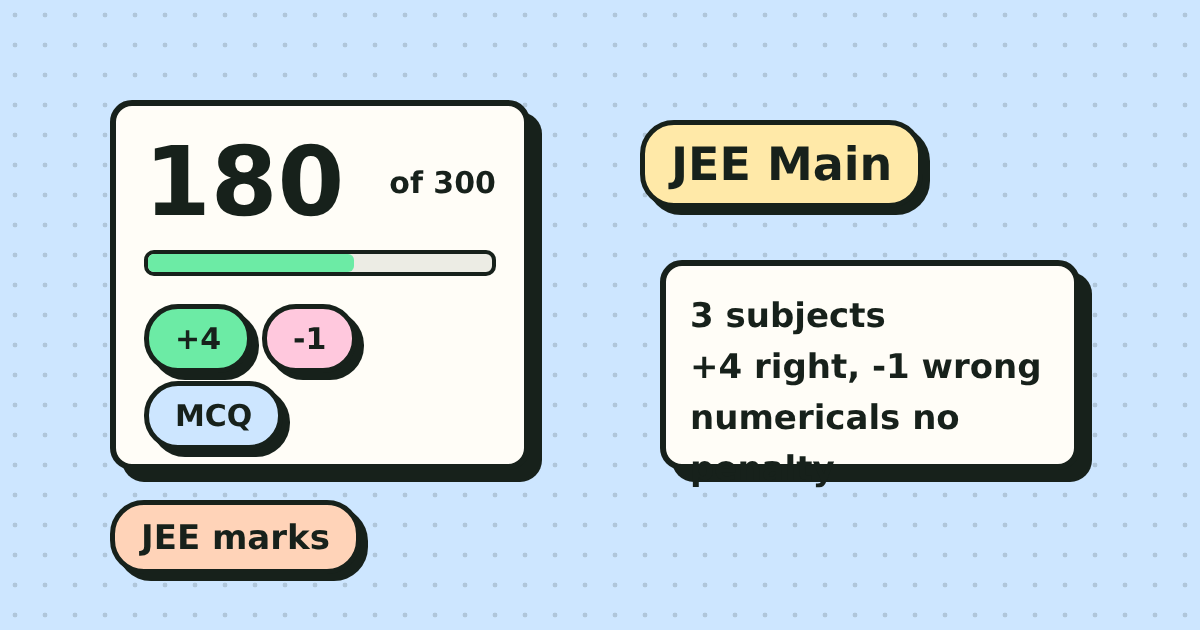
JEE Main has 75 questions for 300 marks and the time allowed is 3 hours. Each wrong answer loses 1 mark. Here is how the score is worked out and what it means for how many questions you should attempt.
JEE Main marking scheme
| Section | Questions | Marks per correct | Negative marking | Total |
|---|---|---|---|---|
| MCQs (all three subjects) | 60 | 4 | -1 | 240 |
| Numerical (all three subjects) | 15 | 4 | None | 60 |
JEE Main marks formula
Score = (correct x 4) - (wrong x 1). Unattempted questions score zero.
Worked example
Say you attempt about 85% of the paper and 80% of those are right.
| Section | Attempted | Correct | Wrong | Score |
|---|---|---|---|---|
| MCQs (all three subjects) | 51 | 41 | 10 | 154 |
| Numerical (all three subjects) | 13 | 10 | 3 | 40 |
Total: 194 out of 300, or 64.67%.
Should you guess in JEE Main?
A guess adds marks on average only if you are more than 20% sure. With four options, removing two gives you 50%, which clears that line. A blind guess among four options (25%) is only just above it, so the gain is small and a single removed option makes it clearly worth it.
Numerical questions
Numerical value questions have no negative marking in this pattern, so attempt them all. Confirm in the current NTA notice.
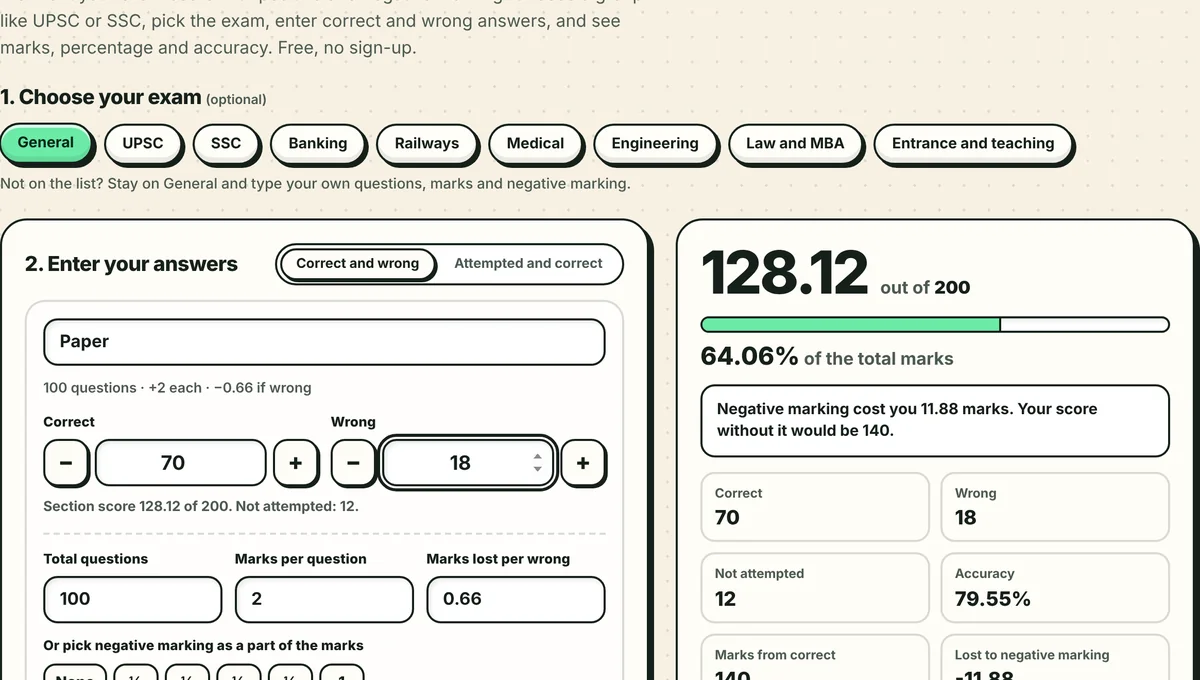
Calculate yours
Open the JEE Main marks calculator for the pattern above, or the main exam marks calculator to change it. Patterns are revised, so check your official notification. Related: how negative marking works.