In an exam with negative marking, a blind guess helps only if your chance of being right is higher than the break-even point. The point depends on one thing: how much a wrong answer costs compared with a right one.
The break-even formula
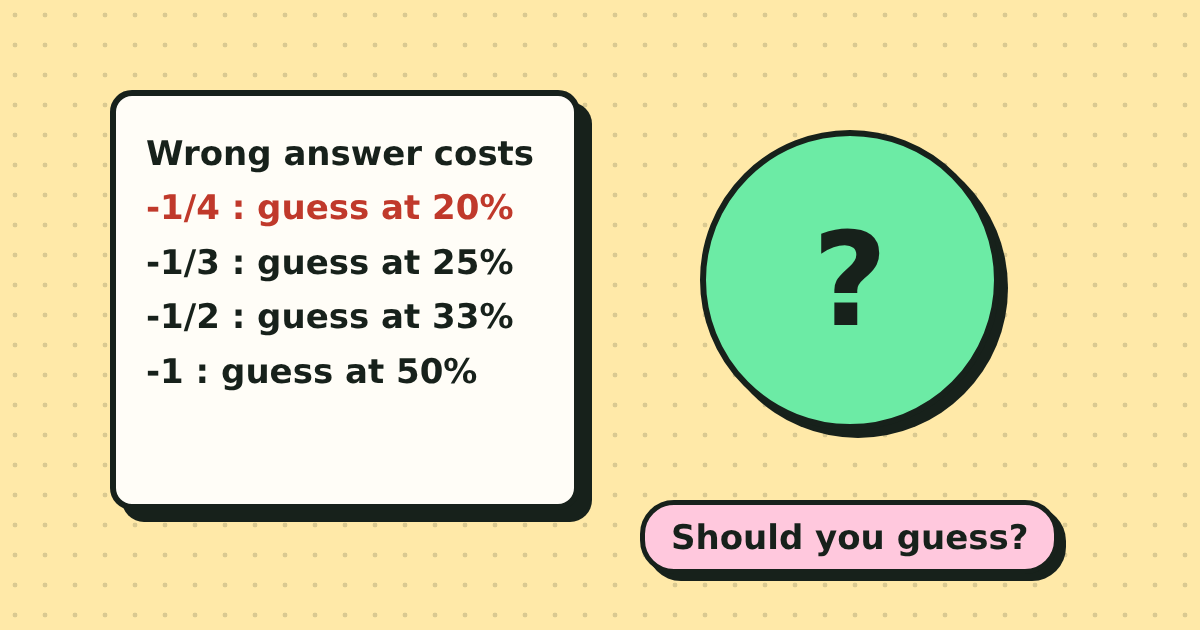
Break-even chance = penalty / (marks for correct + penalty). If you are more than this sure, the guess adds marks on average. If you are less sure, it loses them.
| Penalty for a wrong answer | Break-even chance |
|---|---|
| 1/5 of the marks (for example 4 marks, -0.8) | 16.67% |
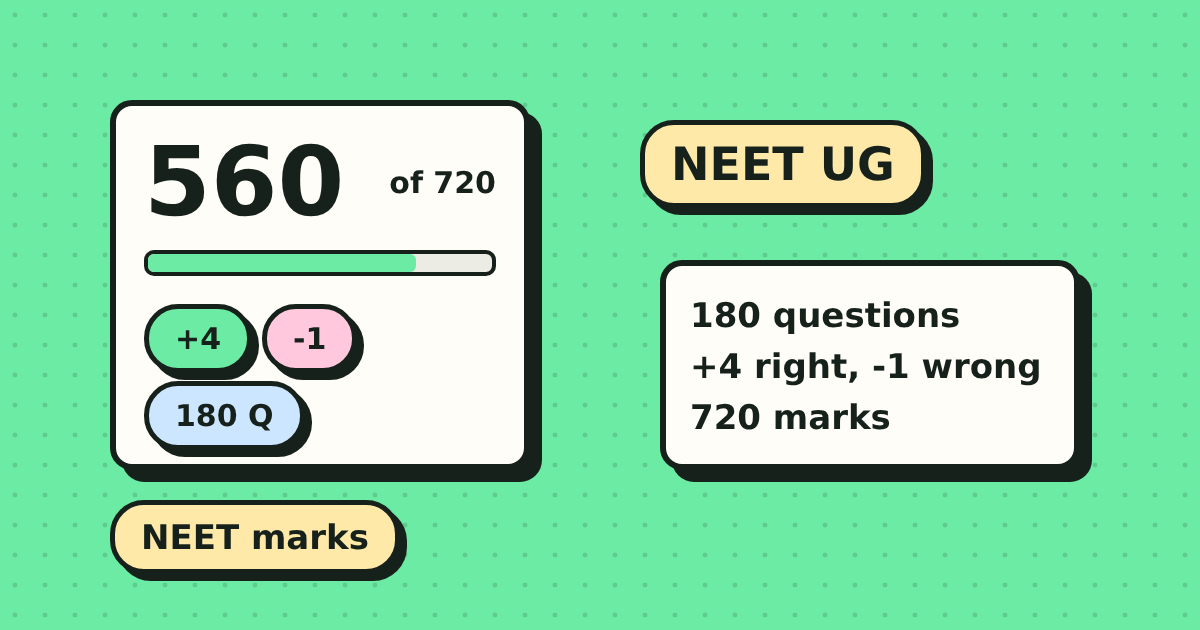
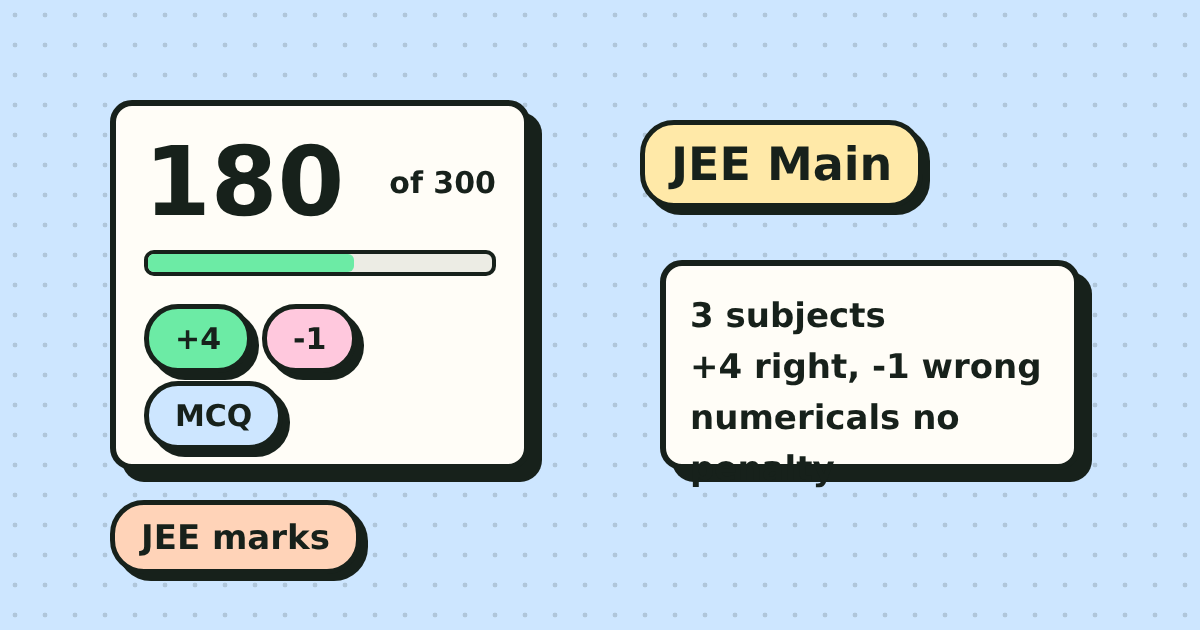
| 1/4 of the marks (NEET, JEE, IBPS: 4 marks, -1 or 1 mark, -0.25) | 20% |
| 1/3 of the marks (RRB: 1 mark, -0.33) | 25% |
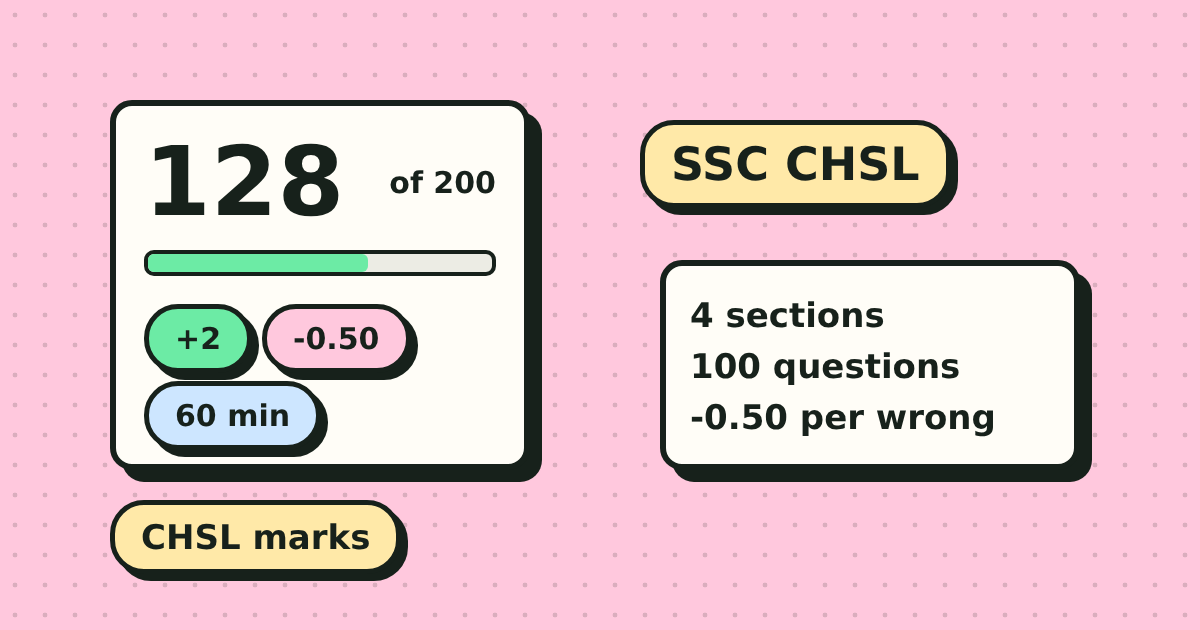
| 1/2 of the marks (1 mark, -0.5) | 33.33% |
| Equal to the marks (1 mark, -1) | 50% |
Why removing options works
With four options and no idea, your chance is 25%. Remove one option and it is 33%. Remove two and it is 50%. With a 1/4 penalty the break-even is 20%, so even a one-option removal makes the guess worth taking. With a 1/3 penalty the line is 25%, so removing at least one option is the safe rule. With a penalty equal to the marks, you need to be above 50%.
A simple rule for the exam
- Attempt every question where you can remove two options.
- Skip a question when you have no idea and the penalty is one third or more.
- With no negative marking, answer everything.
Check your own exam
Pick your exam in the exam marks calculator to see its marking scheme and the guess advice for it. More: how negative marking works.